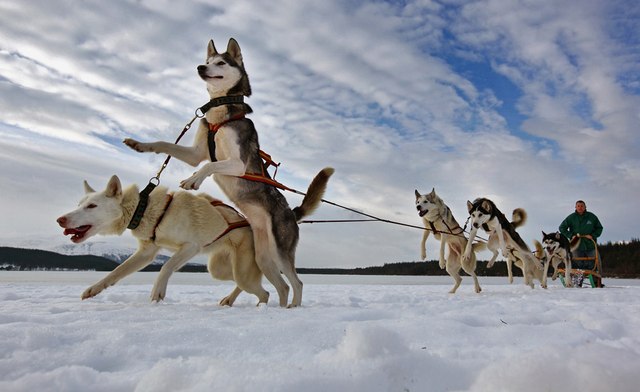
Dog Sled Racing brings so many cultures together when it comes to this exciting winter endurance sport. Different countries with different views come together to co-exist with one another. Canada, Russia, Europe, and the United States come together to participate during this traditional endurance race. There are many cultural characteristics that are shared between these countries during the events. This endurance race brings out how these different countries can co-create with one another. These different cultures learn so much from one another during this event. Dog Sled Racing is a universal shared culture between one another. The behavior, dynamics, feelings, and values may be different from each participant but they all share the same identities during this race. There are many instances during this race where cultures can learn so much from each other. Cultural adaptation is a process that each individual goes through during this event. Each culture shares their own beliefs, values, and morals, not just during the event, but these cultures are shared for a life time
This endurance sport has much of a collectivistic outlook to it as well. The collectivistic outlook comes from the Musher and his team of dogs according to their position in the team relative to the sled. These include leaders or lead dogs, swing dogs, team dogs, and wheelers or wheel dogs. Lead dogs are at the head of the team, listen to the musher, find the trail and set the pace. The swing dogs help with the pace and turn the sled around corners. The team dogs provide the horsepower. The wheel dogs are right in front of the musher and are the strongest dogs on the team. It is a complete team endurance sport. The Musher can of any sex, age, or race, so there is definitely no stereotyping within this endurance sport at all. Cultures of all races can participate in this endurance sport and there is no discrimination between competitors.